Weather Forecast
Updated: 26-Apr 13:00
| Fri | Sat | Sun | Mon | |||||||
| day | night | day | night | day | night | day | night | |||
| Weather |  |
 |
 |
 |
 |
|
|
|
||
| Temp | 8C | -2C | 9C | 3C | 9C | 3C | 14C | 6C | ||
| Wind mph |
7 ESE |
2 SSW |
7 ESE |
4 NNE |
13 NNW |
9 SW |
13 S |
11 SSE |
||
| Rain | possible |
v unlikely |
v unlikely |
v unlikely |
likely |
v unlikely |
v unlikely |
v unlikely |
||
| UV | fair | fair | low | fair | ||||||
|
Developed with the cooperation of the Met Office and Environment Agency |
||||||||||
Current Weather
26-Apr 15:15
| Temperature | |
| 5.7 °C | max 8.8 min -1.2 |
| Wind | |
| 0 mph NE Gusts of 3 mph |
max 11 |
| Rain since midnight | |
| 2.2 mm | |
Transport
in and around Rothbury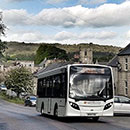
Rothbury is a remote town, but is served by bus companies for travel to Alnwick. Morpeth and Newcastle.
There are also local taxis, a community transport scheme and a volunteer service to help those who need transport for the Rothbury doctors or the Community Hospital.
Visit Rothbury
Tourist Information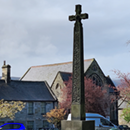
If you're visiting Rothbury, this site will give you some ideas about what is going on locally, as well as help you to choose where to stay and what to do with your time while you're here.
Over the Bridges
Church & Community magazine
Over the Bridges magazine is delivered to every household in the Coquet Valley free of charge 10 times a year.
Visitors can pick up their free copy at various locations in the valley, or view it online
A Brief Chronology
of Rothbury
This brief chronology provides an easy reference to events in and around Rothbury, going back to the last Ice Age.
Caring for Rothbury
Action Group
An emerging group of people who want to be more active in steering the development of Rothbury.
Heritage Trail
A stroll around Rothbury
A circular 1-2km stroll around Rothbury.
Starting in the Cow Haugh Car Park (south of the river) the stroll will take you through some of Rothbury's history. Anything from 1 to 2km depending on your choices.
I took over the site from Michael Hodgson at the end of 2014 with the understanding that existing content would be tidied up, and the site made more of a focus for locals and visitors. Sadly, Michael passed away two years later, but this site is his legacy.
If you have any thoughts on the site, please let me know.